


Pool robots
-
Price on request
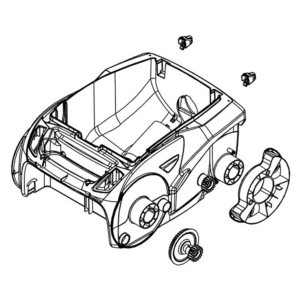
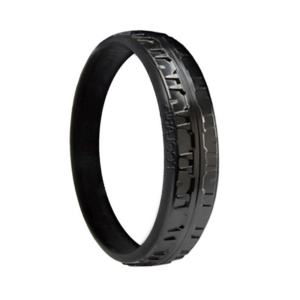




Spare parts for robotic, suction and pressure pool cleaners
A pool cleaner lives a hard life: it is dragged over tile and liner, parked in sunlight, and asked to climb walls in chlorinated water. Sooner or later a brush wears flat, a tracking pin shears, a charger stops delivering, or a drive motor loses its grip on the pinion. Almost none of that means the machine has reached the end of its life. Here you will find the components that keep electric robots, suction cleaners and pressure-side cleaners working, from AstralPool, Fluidra and Polaris, including named ranges such as the RS1, RS2 and RS3 robots, the Aquanaut, the Aquabot and the Magnum Junior.
Which parts wear out first
Wear on a cleaner is predictable, which makes ordering easier once you know where to look. The parts that move, flex or carry current fail long before the housing does.
- Pins, clips and lugs — connection pins, hitch pins, clevis pins and pin-and-lug sets hold handles, hoses and bodies together and are the first thing to vibrate loose or snap.
- Drive assemblies — motors supplied with the motor pinion already fitted, as used on the Aquanaut and other geared cleaners, replace a unit that hums without driving or that has stripped teeth.
- Nose cones and vent plugs — the RS1, RS2 and RS3 nose cone assemblies come with the vent plug and seal ring, the parts that let air escape and keep water out of the wrong cavity.
- Chargers and power leads — lithium-ion chargers for cordless robots, including 25.2 V / 2 A units, supplied with Type A or Type I plug variants.
- Electrical connectors — multi-pin plugs such as the 4-pin plug used on the Magnum Junior, where corroded or bent pins cause intermittent operation.
- Wall and hose fittings — pressure-side hardware such as the Polaris universal wall fitting adjustable plug, which sets how much flow reaches the cleaner.
Identifying the right part before you order
Cleaner ranges share a great deal of hardware between generations, so the safest route is the manufacturer part number. It is often moulded into the plastic, printed on a label inside the lid or body, or listed as a position number on the exploded view in the owner’s manual. Matching that number, rather than the look of the part, avoids the common mistake of ordering a visually similar component from a neighbouring model.
Where no number survives, measure. Pins are defined by length and shank diameter — the stainless steel clevis pin listed at 1.69 in long by 0.210 in diameter is a good example of how little difference it takes to make a pin wrong. Note the head style too: a flat-head clevis pin and a standard clevis pin are not interchangeable in every bracket. For seals and seal rings, measure the inside diameter and the thickness of the old ring while it is still in place if possible, since removed rubber relaxes and distorts.
For chargers, check three things on the label of the original: the output voltage and current, the connector that enters the robot, and the mains plug shape you need. A 25.2 V battery pack expects a charger matched to that chemistry and voltage, and plug variants described as Type A or Type I differ only in the socket they fit, not in what they do.
Robotic, suction and pressure cleaners are not the same
Cordless and mains-powered robots carry their own motor, filter and electronics, so their spares are mostly electrical: batteries, chargers, drive motors, connectors and sealed housings. Suction cleaners run off the skimmer or a dedicated suction line and rely on hoses, diaphragms, feet, brushes and the pins that join sections together. Pressure-side cleaners take water from a booster or return line, which is why wall fittings, adjustable plugs and hose connectors matter so much to how they behave. Knowing which family your machine belongs to narrows the search considerably, and explains why a part that fits a manual cleaner will not help a battery robot.
Pool robots at PoolParthub.com
Here we list thousands of cleaner components, covering the small consumables that disappear during a service as well as the larger assemblies such as drive motors and nose cone kits. The range spans AstralPool, Fluidra and Polaris cleaners, with original part numbers shown so a part can be checked against a manual or an exploded view before it is added to a basket.
Everything is grouped so that pins, electrical items, seals and drive components can be found together, which helps when one repair turns into two. If a number on an old part is still legible, searching for that reference is the quickest way to reach the correct item.