


Water testing
-
 €244,95
-
€99,95
-
Price on request
-
Price on request
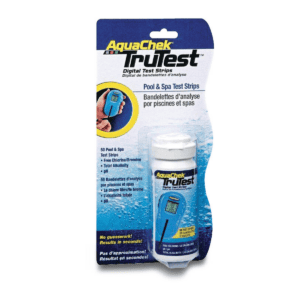
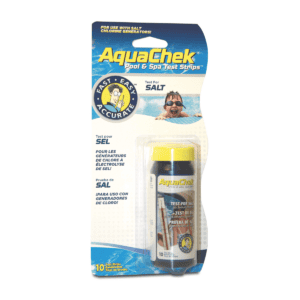



Water testing for pools, spas and water treatment
Pool water only behaves if it is measured. Chlorine level, pH, redox potential and temperature all move with bather load, sunlight, rainfall and dosing, and a reading taken with a tired meter or an out-of-date reagent is worse than no reading at all. Here we list electronic testers, pocket thermometers, calibration solutions and replacement reagent sets from Hanna Instruments, so that both the measuring instrument and the consumables it depends on can be ordered from one place.
What the range covers
The products fall into four broad groups, and most pool operators end up buying from more than one of them.
- Pocket testers — combination instruments such as the waterproof pH / ORP / temperature tester HI98121, the ORP and temperature tester HI98120 reading to ±1000 mV, and the DiST® series for conductivity and TDS, including the HI98304 covering 0.00–20.00 mS/cm and the HI98312 EC / TDS / temperature model.
- Thermometers — the Checktemp family, from the folding pocket HI151-2 to the HI98509 with penetration probe and 1 m cable, and the HI98539 dip thermometer with a 3 m weighted probe for taking readings at depth.
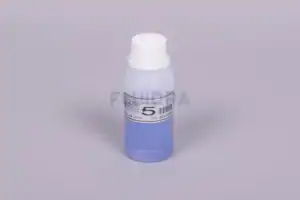
- Calibration solutions — pH 4.01, 7.01 and 10.01 buffers, ORP solution at 470 mV and conductivity standard at 1413 µS/cm, in 230 mL bottles or single-use 20 mL sachets.
- Replacement reagents — refill packs for chemical test kits, covering free chlorine, hypochlorite, ozone and hydrogen peroxide, typically supplied as 50 or 100 tests.
Which instrument measures what
pH tells you whether the water is comfortable and whether your disinfectant is working efficiently; ORP, expressed in millivolts, describes the oxidising strength of the water rather than the concentration of any one chemical, which is why it is the value most automatic dosing controllers watch. Conductivity and TDS indicate how much dissolved material the water carries — useful on salt-chlorinated pools and on systems where refill water quality varies. Temperature matters in its own right and also because pH and conductivity readings shift with it, which is why several of the combination testers measure it alongside the main parameter.
If you already run a controller or a professional photometer, the reagent refills matter more than the meters. Note the method on the box before ordering: DPD reagents are used for free chlorine and ozone, and a kit built around one chemistry cannot be fed with reagents intended for another. Check the test count and the measuring range as well — for example, a free chlorine refill covering 0.0–2.5 mg/L suits routine pool checks but not a shock-dosed or heavily loaded system.
Calibration solutions and when to use them
Electrodes drift. A two-point pH calibration using 7.01 and then either 4.01 or 10.01 is the usual routine, and the pair of buffers should bracket the range you actually measure — for pool water that normally means 4.01 and 7.01. Pour buffer into a clean beaker, use it once and discard it; never return used solution to the bottle, and keep bottles closed, as pH 10.01 in particular absorbs carbon dioxide from the air and loses accuracy over time. Single-use sachets avoid that problem entirely and travel well, which is why kits such as the 10 × 20 mL pH 4.01 and 7.01 set are popular for site visits.
ORP electrodes are checked against a solution of known millivolt value, and conductivity meters against a standard such as 1413 µS/cm. Rinse the probe with deionised water between solutions rather than wiping it dry, and store pH electrodes wet in the proper storage solution, not in distilled water.
Getting a reading you can trust
Take the sample at elbow depth away from the inlets, in a clean container, and test it promptly — chlorine in particular degrades in a sample bottle left in sunlight. Rinse the container with pool water first. Reagents have a shelf life, so write the opening date on the pack, and if a result looks improbable, repeat it with a fresh sample before adjusting chemicals.
Water testing at PoolParthub.com
Here you will find testers, thermometers, buffers and reagent refills side by side, so a meter and its calibration consumables can be ordered together rather than discovered missing at the start of the season.
Products are listed with their model references, such as HI98121 or HI7007M, so an existing instrument or kit can be matched exactly. If you are replacing reagents, check the code printed on your current pack against the listing before ordering.