


Bayroll
-
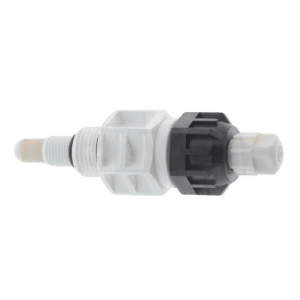 Price on requestPrice on request
Bayroll dosing components for automatic pool water treatment
Bayrol is a familiar name on the equipment wall of many private and public pools, where its measuring and dosing systems keep chlorine, pH and flocculant additions steady without manual intervention. The parts listed here belong to that world of automatic dosing: small components fitted into the pipework and the dosing lines that do the actual work of getting a measured dose of chemical into the circulating water. They are not glamorous items, but a dosing system is only as reliable as its injection point, and a worn or blocked valve is one of the most common reasons a controller appears to dose correctly while the water quality drifts.
What an injection valve does
An injection valve is fitted into the return pipework, downstream of the filter and heater, and forms the point where liquid chemical from the dosing pump enters the flowing water. It performs two jobs at once. First, it introduces the dose into the middle of the pipe so that the chemical is carried away and diluted immediately rather than sitting against the pipe wall. Second, it acts as a non-return device, so pool water under pressure cannot push back up the dosing hose towards the pump and the chemical container.
That second function matters more than most owners realise. If the valve no longer seals, water can migrate into the suction line, the pump loses prime, and dosing becomes erratic or stops altogether. Crystallised deposits around the injection point are usually the first visible sign.
Why PVDF is used at the injection point
The Bayrol Injection Valve PVDF (171008) is made from polyvinylidene fluoride, a fluoropolymer chosen for duty where plastics meet concentrated chemicals. At the injection point the material is exposed to undiluted product on one side — typically hypochlorite, pH correction fluid or similar — and to warm circulating pool water on the other, so a simple commodity plastic is not appropriate. PVDF is used in chemical dosing hardware precisely because it tolerates that kind of contact while staying dimensionally stable.
- Chemical contact: the valve body sits in the path of concentrated dosing fluid, not diluted pool water.
- Pressure and flow: it is fitted into the pressure side of the circulation loop, after the pump.
- Temperature: heated pools put the injection point in a warm, continuously wet position.
- UV and splash: plant rooms and outdoor installations expose fittings to light and to chemical splash during container changes.
Identifying the right part before ordering
Dosing accessories look similar across brands, so a few checks save a wasted order. Work from the valve already on the pipe rather than from memory.
- Part number: compare the number stamped or printed on the system documentation with the reference given here — 171008 in the case of this valve.
- Hose connection: note the outside diameter of the dosing hose currently pushed onto the valve, and whether it is secured by a union nut or a clamp.
- Pipe thread: check the threaded boss or saddle in the pipework into which the valve screws, and whether a sealing washer or O-ring is present.
- System type: identify which Bayrol controller or dosing pump the line serves, as spare part lists are organised per system.
- Position on the drawing: if a manual with an exploded view is available, use the position number next to the valve to confirm the match.
Maintenance and when to replace
Injection points benefit from being inspected whenever the dosing container is changed. Unscrew the valve at the end of the season, rinse it in clean water and look at the sealing surface and the internal ball or diaphragm. Scale and crystallised chemical are the usual culprits; once they have scored the seat, cleaning no longer restores a tight seal and replacement is the sensible route. Always depressurise the circulation line and isolate the dosing pump before removing anything, and avoid mixing different chemical products in a line that has not been flushed.
Bayroll at PoolParthub.com
Here you will find Bayrol dosing hardware for measuring and control installations, starting with the injection valve in PVDF that terminates the dosing line at the pipework. These are replacement components for systems already installed, supplied so that an existing controller can keep running rather than being rebuilt around a different brand.
The range is kept deliberately close to what fails in service: valves, seals and connection parts at the wet end of a dosing circuit. If the number on your documentation is not shown, note it down along with the hose and thread sizes, as the correct equivalent can usually be traced from those details.