


DS78TBR (KIWA MNK-N)
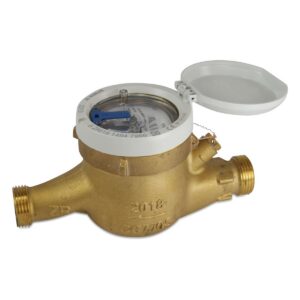
DS78TBR brass water meters with KIWA MNK-N approval
Here you will find the DS78TBR meter in its DN20 version: a brass-bodied water meter with 1″ male threaded connections, rated to 16 bar and fitted with a pulse output. It carries the KIWA MNK-N marking, a Dutch approval mark used for components intended for drinking water installations. In and around a swimming pool, a meter of this type is used to record how much mains water is drawn into the pool and its technical room — for top-up after backwashing, for filling a buffer tank, for feeding an automatic water level controller, or simply to keep an eye on consumption across a season.
What the range covers
The listing is deliberately narrow, because this is a specific meter rather than a family of sizes. The DN20 size is the one most often needed on pool top-up lines, where a 1″ supply is common and flow rates are modest but continuous during filling.
- Body: brass, which suits pressurised drinking water and treated mains supply lines.
- Nominal size: DN20, with 1″ male threads at both ends.
- Pressure rating: 16 bar, comfortably above the pressure found in a typical domestic or commercial mains feed.
- Output: pulse, so the meter can be read remotely instead of only on the dial.
- Marking: KIWA MNK-N, relevant where approved drinking water components are required.
Checking the connection before you order
Thread confusion is the most common reason a meter has to go back, so it is worth measuring rather than guessing. DN20 is a nominal size, not a measured one: the male thread measures roughly 33 mm across the outside diameter, which is why it is called 1″ even though nothing about it is literally an inch. If the existing pipework is marked ¾″ or DN25, this is not the right size.
- Measure the male thread: use a caliper on the outside diameter of the existing fitting, not on the pipe.
- Check the installation length: measure the gap between the two unions or isolating valves the meter sits between, so the new body and its couplings fit without reworking the pipe.
- Note the flow direction: water meters are directional and the arrow on the body must follow the flow.
- Plan the mounting position: most meters of this type are intended to be fitted with the dial accessible and the body full of water, so avoid the top of a riser where air can collect.
- Fit isolating valves and a strainer: grit from older galvanised or buried pipework is hard on any meter mechanism.
Working with the pulse output
The pulse output is what makes this meter useful beyond manual readings. Each pulse represents a fixed volume of water, and that volume is stated on the meter’s own dial or label — always read it from the unit in front of you rather than assuming a value, because it differs between meter types and sizes. The pulses can be counted by a building management system, a dosing or water treatment controller, an energy and water monitoring logger, or a simple pulse counter in the plant room.
Typical uses around a pool include logging seasonal top-up volumes to spot a leak in the shell or the balance line, confirming how much water each backwash cycle consumes, and triggering an alarm if the make-up valve stays open longer than it should. Keep the signal cable away from pump and heater power cabling to limit interference, and record the dial reading at the moment the counter is commissioned so the two can always be reconciled.
Keeping a meter working
Mechanical water meters are long-lived but not maintenance-free. Protect the body from frost in unheated plant rooms, since a frozen meter can split and brass will not forgive it. Replace the sealing washers whenever the meter is removed rather than reusing flattened ones, and check the glass or lens for condensation, which usually means the dial chamber has been breached. If the register slows or stops while water is clearly flowing, the mechanism has normally been damaged by debris and the meter is replaced rather than repaired. Where a meter is used for billing or official records, local rules on verification and replacement intervals apply and should be checked for your own country.
DS78TBR (KIWA MNK-N) at PoolParthub.com
Here we stock the DN20 DS78TBR with 1″ male threads, 16 bar rating, brass body and pulse output, so installers and pool owners can measure and log mains water on a top-up or fill line without piecing a solution together from mismatched parts.
Because pool technical rooms are rarely identical, the details above are given so the connection size, installation length and pulse reading can be confirmed against your own pipework before fitting. If the thread or nominal size does not match, a different size of meter is the right answer rather than an adaptor stack that leaks.