


Pool-Tite
Pool-Tite makes pipe glue, including Blue-Tite Glue for flexible PVC and ABS pipes. At PoolParthub.com you will find Blue-Tite Glue in a handy 125 ml size, the kind of part you need to bond pipes and fittings in pool and spa plumbing. With the right glue to hand, you can repair a leaking or loose connection instead of replacing the whole pipe.
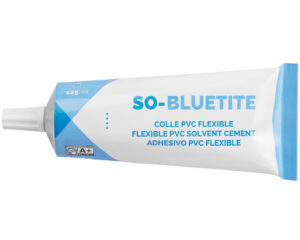
Pool-Tite solvent cement for pool pipework
Pool pipework is only as reliable as the joints that hold it together. Pumps, filters, heat pumps, skimmers and returns are all connected with plastic pipe, and almost every one of those connections is made by solvent welding rather than mechanical fastening. Pool-Tite supplies adhesive for exactly that job, and here you will find Blue-Tite glue in a 125 ml tin, formulated for flexible PVC and ABS pipe and fittings.
What the Pool-Tite range covers
The range listed here is focused on one task: bonding plastic pool pipe. Blue-Tite Glue 125 ml (reference IT3) is intended for flexible PVC hose and for ABS, two materials that turn up constantly in domestic and commercial pool installations. The blue tint makes applied adhesive easy to see on white or grey pipe, so you can check coverage around the full circumference of a spigot before the fitting goes home — a small detail that prevents a large number of weeping joints.
A 125 ml tin suits repair work and small to medium installations: replacing a cracked union, re-making the suction line to a new pump, extending a return, or joining lengths of flexible hose during a renovation. For a complete new pipe run with dozens of joints, plan on more than one tin rather than stretching the last of a part-used container.
Where solvent cement is used in a pool system
Typical points in a pool circuit where a solvent-welded joint is made or re-made:
- Pump suction and discharge — unions, elbows and reducers between skimmer line, pump and filter.
- Filter connections — pipe tails to multiport or side-mount valves and to the filter tank’s inlet and outlet.
- Flexible hose runs — buried or routed lines where rigid pipe cannot follow the shape of the excavation.
- Returns and inlets — short lengths of pipe between the wall fitting and the main line.
- Heat pump and heater bypasses — three-valve arrangements built from standard fittings.
- Repairs — cutting out a split section and bonding in a new piece with couplers.
Making a sound joint in flexible PVC and ABS
Solvent cement does not glue in the ordinary sense: it softens the surfaces of pipe and fitting so that the two fuse as the solvent leaves the joint. That means preparation matters more than the amount of adhesive used.
- Cut square — a ragged or angled cut leaves a gap that no amount of cement will fill.
- Deburr and chamfer — remove the internal burr and ease the outer edge of the spigot so the fitting slides on without scraping all the cement off.
- Clean and dry — wipe away dust, grease and water. Flexible hose pulled out of a trench is rarely clean enough as it comes.
- Dry fit first — check depth and alignment, and mark the insertion depth and the orientation of the fitting with a pencil.
- Apply evenly — coat the spigot and the socket, then push home with a slight twist and hold until the joint stops trying to push itself apart.
- Let it cure — follow the instructions on the tin for set and cure times, and do not pressurise or fill the line before the joint is ready.
Work in a ventilated space, keep the tin closed between joints so the solvent does not flash off, and remember that flexible PVC relaxes under load — support long hose runs rather than letting them hang on a freshly made joint.
Choosing the right adhesive and quantity
Before ordering, confirm what the pipe actually is. Flexible PVC hose, rigid PVC-U, ABS and polyethylene look similar once they are grey or black and covered in dust, but polyethylene cannot be solvent welded at all and needs compression or electrofusion fittings instead. Check any printing on the pipe wall, or the markings on the fitting, and match the adhesive to the material rather than to the colour.
Also consider how much pipe you are joining. Larger diameters absorb a surprising quantity of cement because both the socket and the spigot have to be coated along the full insertion depth. A 125 ml tin covers a handful of medium-diameter joints comfortably; for bigger projects it is sensible to keep a spare, since a partly used tin that has been open for a long time is not worth risking on a buried line.
Pool-Tite at PoolParthub.com
Here we stock Pool-Tite Blue-Tite Glue in the 125 ml size for flexible PVC and ABS, the adhesive most often reached for when a pool pipe has to be cut, extended or repaired. It sits alongside the pipe, fittings, unions and valves on the site, so a repair can be ordered as one set rather than assembled from several sources.
If you are unsure whether your pipework is suitable for solvent welding, note the diameter and any markings on the pipe before ordering and compare them with the fittings you intend to use. Getting the material right at that stage saves far more time than any adhesive can.