


Tavlit

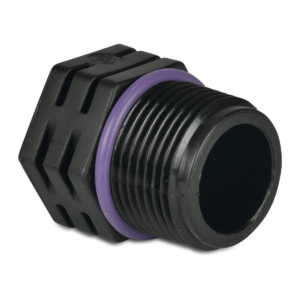
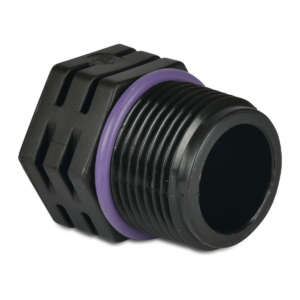
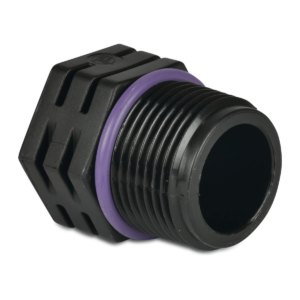

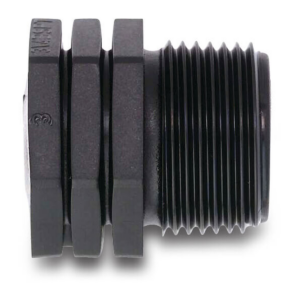

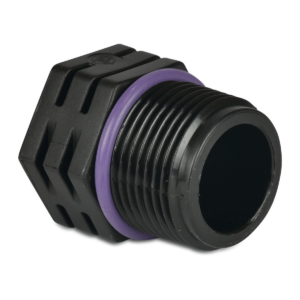
Tavlit plugs for pool and irrigation pipework
Small threaded plugs do a quiet but important job in a pool installation. They close off unused ports on manifolds and headers, seal spare outlets on filter and pump bodies, cap drain points over winter and blank pressure gauge or air-release tappings that are not in use. Here we list the Tavlit polypropylene plug range, in male thread sizes from ½” up to 2″, in both standard and self-seal versions, with pressure ratings of 10 bar and 16 bar depending on the model.
Wat het assortiment omvat
The plugs are moulded in polypropylene (PP), a material widely used in water-handling fittings because it resists corrosion, does not rust like brass and copes well with the chlorinated or salt water found around pool plant. All the items here have a male thread, so they screw into a female socket, boss or tapped port. The range breaks down roughly as follows:
- Self-seal plugs, 10 bar – available in ½”, ¾”, 1″, 1¼”, 1½” and 2″, giving a continuous size ladder for most small and medium pipework.
- Standard plugs, 16 bar – listed in ¾” and 1¼”, for connections where a higher pressure rating is wanted.
- Thread sizes in inches – quoted the way pipe fittings are normally described; one item is explicitly marked BSP male thread.
- Reference numbers – each plug carries its own article number, such as 7038278 or 7033651, which is the quickest way to reorder exactly the same item.
Self-seal versus standard plugs
A self-seal plug is designed to seal on its own sealing face or integral gasket, so it can normally be fitted and removed by hand or with light tool pressure without building up layers of PTFE tape or thread paste. That makes it convenient for ports that are opened seasonally, for example a drain plug taken out each autumn and refitted in spring. A standard plug relies on the thread engagement and on whatever sealing compound is applied to it, and is often chosen where the plug goes in once and stays in.
Whichever type is used, do not overtighten. Polypropylene threads will strip or split long before metal ones, and a plug that has been forced into a tapered female port can crack the housing it is screwed into. Tighten until the seal is felt to bite, then check for weeping once the system is back up to pressure.
De juiste maat kiezen
Thread sizes are named rather than measured, so a 1″ male thread does not measure one inch across. The reliable way to identify a replacement is to work from the fitting it goes into or from the old plug itself:
- Match the old part – if a plug is being replaced, compare the outside diameter and the thread pitch of the original against the size you intend to order.
- Read the housing – many filter, valve and manifold bodies have the port size moulded or printed beside the tapping.
- Gebruik de exploded view – where the equipment came with a parts diagram, the position number for the plug or drain cap will tell you which size the manufacturer fitted.
- Check parallel or tapered – parallel threads seal on a face or gasket, tapered threads seal on the thread itself; a self-seal plug is intended for a port that gives it something to seal against.
- Confirm the pressure rating – choose a plug rated at or above the working pressure of the line it closes, allowing for pump start-up surges.
Typical uses around pool plant
In a pool room these plugs are most often found on filter drain bosses, on spare ports of multiport valves and strainer housings, on the unused side of a bypass or heater manifold, and on irrigation-style distribution pipework around the pool surround. Keeping a couple of the common sizes in the maintenance box is sensible: a missing or cracked plug stops a filter being pressurised at all, and in winter a seized drain cap can mean water left standing in a housing.
Tavlit at PoolParthub.com
Here you will find the Tavlit polypropylene plug range in a single place, from the ½” self-seal plug up to the 2″ version, alongside the 16 bar variants in ¾” and 1¼”. Each listing shows the thread size, the pressure rating and the article number, so the right item can be identified without guesswork.
Parts like these are low in value but hold a whole circuit together, so they are kept as a complete size ladder rather than as odd sizes. If you are unsure which thread your housing uses, note the article number of the plug you are replacing or the position number from the parts diagram, and compare it with the sizes listed above before ordering.