


Sta-Rite

Sta-Rite pool pumps and spare parts
Sta-Rite is a familiar name on pool plant rooms across Europe, usually found on the nameplate of a single-speed circulation pump fitted to a domestic or small commercial pool. The model codes are short and easy to miss, but they matter: a 5P2R and an S5P1R are not the same unit, and the wet-end parts that fit one do not always fit the other. Here you will find a compact selection of Sta-Rite pumps and the service parts that are most often replaced when a pump starts to leak, hum or lose prime.
What the range covers
The selection is deliberately narrow and focuses on the parts that fail first rather than on whole-pump replacement. At present it includes:
- Complete pumps — the Sta-Rite 5P2R at 0.75HP, with 1½” female threaded suction and discharge connections and a 230VAC single-phase motor, suitable as a direct replacement where the existing pipework and electrical supply match.
- Seal plates with mechanical seal — reference R355612SS, the plate that sits between motor and volute and carries the rotating shaft seal, listed for Superflo, Supermax and S5P1R wet ends.
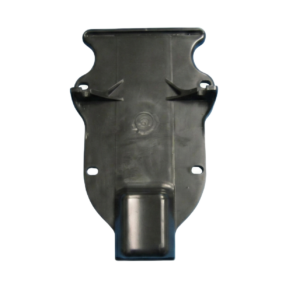
- Pump bases and mounting hardware — the Superflo pump base R351094, which supports the motor and volute assembly and is a common casualty of corrosion or a cracked mounting foot.
Because Sta-Rite and Pentair wet ends share a great deal of design, several part numbers in this range are cross-listed for Superflo and Supermax housings. That is useful in practice: a pump wearing a Sta-Rite badge often takes the same seal plate as its Pentair-branded equivalent.
Identifying the right part
Start at the motor nameplate. It carries the model code, the horsepower rating and the supply voltage, and those three details settle most questions before any measuring begins. Write them down exactly as printed, including suffix letters such as the R in 5P2R, because the suffix frequently indicates the wet-end variant rather than the motor.
From there, work through the following checks:
- Connection size and type — note whether the ports are threaded or for glued pipe, and the nominal size. The 5P2R listed here uses 1½” female threads; adapters change the footprint and the pressure drop, so match where possible.
- Position number on the exploded view — pump diagrams number every component. Quoting the position number alongside the model code is the fastest way to be certain you are looking at the same seal plate, base or volute as the drawing.
- Shaft seal dimensions — if the pump has already been stripped, measure the inner and outer diameter of the old seal and its overall height before ordering. A seal plate supplied complete with its mechanical seal removes that guesswork, which is why assemblies such as R355612SS are often the simpler route.
- Motor frame and mounting centres — before replacing a base, measure the distance between the fixing holes and check the height from the base to the pump centreline, so the existing unions still line up.
- Voltage and phase — 230VAC single-phase is the common domestic arrangement in Europe, but confirm it against the nameplate and the installation rather than assuming.
Typical wear points on these pumps
Mechanical shaft seals are the usual reason a working pump is opened up. A damp patch under the seal plate, a rust streak down the motor face or water tracking along the shaft all point the same way, and continuing to run the pump risks the motor bearings. Replacing the seal plate complete with its seal is a tidy fix because the sealing faces arrive already matched.
Other recurring items are the lid O-ring and basket on the strainer pot, which harden and let air in, causing poor prime and a noisy pump; and the base, which takes the weight of the assembly and suffers from standing water, chemical splash and vibration. A cracked or softened base allows the motor to sit out of line, which in turn shortens seal life — so it is worth inspecting whenever the wet end is apart.
Sta-Rite at PoolParthub.com
Here we list Sta-Rite pumps alongside the seal plates, bases and wet-end components that keep an existing installation running, including parts shared with Pentair Superflo and Supermax housings. The aim is to make a repair possible where a full replacement would otherwise be the only option.
If you are unsure which variant is installed, send the full nameplate text and, where available, the position number from the exploded view. That is almost always enough to match the correct component to your pump.