


Poollab
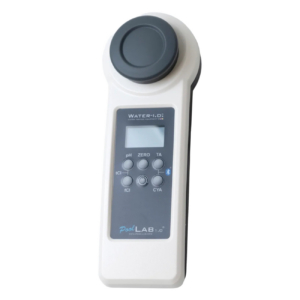
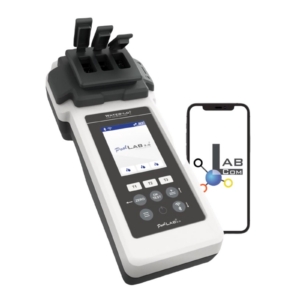
Poollab digital pool water testers
Here you will find the handheld photometers from the PoolLab range, used to measure the chemical balance of swimming pool and spa water. Unlike test strips, which rely on the eye to match a colour to a printed chart, a photometer passes light through the sample and reads the colour change electronically, then shows a figure on a display. That removes the guesswork from dosing and makes it much easier to see small changes from one test to the next.
The range listed here covers two generations of the same concept: the PoolLab 1.0 digital pool tester and the newer PoolLab 2.0 digital pool water tester. Both are compact, battery-powered units intended for pool owners, holiday-let managers and service technicians who want laboratory-style readings without sending samples away.
How a photometric tester works
Testing follows the same sequence whichever unit is used. A measuring cuvette is filled with pool water, the device takes a blank reading of that untreated sample, then a reagent tablet is added and crushed so the water develops a colour. The unit compares the two readings and converts the difference into a value for the parameter being tested.
Because the reading is relative to the blank, the method copes well with slightly cloudy or tinted water, which is exactly where visual comparators tend to mislead. The parameters available depend on which reagent tablets are used — typical pool testing covers free and total chlorine, pH, and the supporting values such as alkalinity, cyanuric acid and calcium hardness. Bromine and active oxygen systems are tested with their own tablet types.
Choosing between PoolLab 1.0 and PoolLab 2.0
Both testers are aimed at the same job, so the decision is usually about generation and how the results are recorded.
- PoolLab 1.0 – aparat digital de testare a apei din piscină — the established handheld unit, long used by pool owners and service companies, operated directly from the keypad with values shown on the screen.
- PoolLab 2.0 – aparat digital de testare a apei din piscină — the later model, designed to be used on its own or alongside a smartphone so that readings can be logged rather than written down.
- Continuity of method — both work with crushable reagent tablets and cuvettes, so a technician familiar with one will be at home with the other.
- Replacement or second unit — if a tester has been dropped or has a damaged cuvette chamber, replacing the whole unit is often simpler than repairing it, and the older model remains a practical choice.
Consumables, accuracy and looking after the unit
A photometer is only as good as what goes into it. Reagent tablets have a shelf life and absorb moisture, so foil strips should be kept sealed, handled dry and stored away from heat. Crush the tablet fully and make sure it has dissolved before reading, as undissolved fragments scatter light and skew the result.
- Cuvettes — scratches, limescale film and fingerprints on the optical surfaces all affect readings; rinse with sample water, dry with a lint-free cloth and replace any cuvette that has become cloudy.
- Light path — keep the chamber free of water droplets and dust, and wipe out any reagent residue after testing.
- Sampling — take water at elbow depth away from the return jets and test promptly, because chlorine readings in particular drift once a sample stands in sunlight.
- Batteries — low power can interrupt a measurement cycle, so fit fresh cells before a full water analysis.
Poollab at PoolParthub.com
Here we list the PoolLab 1.0 and PoolLab 2.0 handheld testers so that pool owners across Europe can move from colour charts to actual numbers. These are the units most often chosen by people who dose their own water and want to know whether a correction has worked, rather than guessing from a shade of pink or yellow.
Both generations are kept available because many pools already have one in the plant room and simply need a like-for-like replacement, while new buyers tend to look at the latest model. If you are unsure which unit suits your pool or which parameters you need to monitor, the product pages describe each tester in more detail.