


Biopool
Biopool electrolysis cells, cell housings and seals
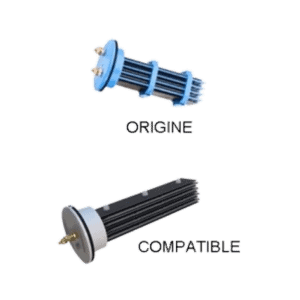
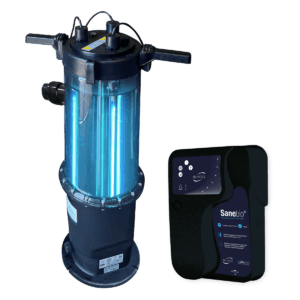
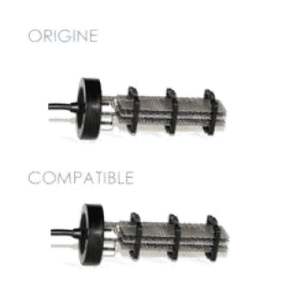
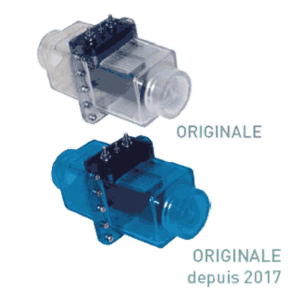
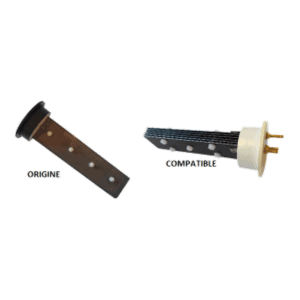
Biopool supplies the consumable and sealing side of salt chlorination: electrode cells, the transparent or moulded housings they sit in, the caps and plugs that close them, the pipe fittings that connect them to the circulation line, and the gaskets and O-rings that keep the whole assembly watertight. The range here spans both original parts and compatible equivalents built to fit the cell bodies of well-known chlorinator brands, so an older unit can usually be kept in service without replacing the control box.
Here you will find parts referenced against systems such as Zodiac, Sterilor, Monarch, Nexus, Pool Technologie, Corelec, Paramount, JustChlor and Regul Electronique, alongside Bio-Pool” own probe seals and O-rings. Because salt electrolysis equipment has been built in many small series over the years, matching is done on the cell body and housing geometry rather than on the brand name alone.
What the range covers
Salt chlorinators fail in a small number of predictable places, and the assortment is organised around them.
- Cells and cell kits – complete electrode assemblies and kits such as the Regul Electronique compatible cell kit G2, where the plates, the moulded head and the connections are supplied together.
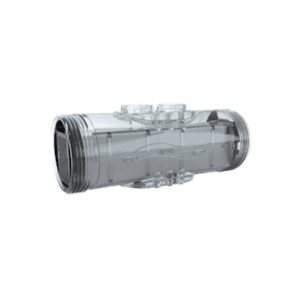
- Cell bodies and housings – Nexus compatible cell bodies in Type B and Type C, Sterilor original cell housings, Monarch original housings for the CESC, CESR and ESC/ESR series, and Corelec compatible housing kits.
- Caps, plugs, sockets and bases – Zodiac original cell caps and connectors, Sterilor compatible caps and plugs, JustChlor compatible cell sockets.
- Garnituri și sigilii – Nexus compatible cell seals in Type B and Type C, Paramount compatible cell gaskets, generic compatible cell housing gaskets and Bio-Pool probe seals and O-rings.
- Pipe fittings and unions – Sterilor compatible cell pipe fittings and similar connectors that join the cell chamber to rigid or flexible pipework.
Which parts wear first
Electrode plates are the true consumable. Their coating is slowly consumed by the electrolysis process, and output falls away long before the cell looks damaged, so a unit that no longer holds chlorine with correct salt level, flow and stabiliser is often simply at the end of its plate life. Scale build-up between the plates has the same symptom and is worth ruling out first.
Around the cell, the parts that give trouble are the flat gaskets and O-rings. Chlorine, UV through transparent housings and repeated winter dismantling harden the rubber until it takes a permanent set and weeps at the cap or at the probe port. Cell housings themselves can craze or crack at the thread, and connector caps suffer from heat and corrosion at the terminal pins. Ordering a seal kit at the same time as a cell or housing saves a second shutdown.
Identifying the right part
Model names printed on a control box are rarely enough on their own, because several cell generations may share the same front panel. Work from the hardware instead.
- Read the cell label – codes such as CESC, CESR or ESC/ESR, and type designations such as Type B or Type C, usually appear on the cell head or the housing collar and are the fastest route to the correct body and seal.
- Count and measure the plates – note the number of plates, their width and whether the head is round or rectangular; this separates otherwise similar cells.
- Check the connection – the number of terminal pins, their spacing and whether the cable screws, clips or plugs on determine which cap or connector will mate.
- Measure seals before ordering – take the inner diameter and the cord thickness of an O-ring with a caliper, and the inner and outer diameter of a flat gasket, rather than judging by eye.
- Note the pipework – housing unions are supplied for different pipe sizes, so measure the outside diameter of the pipe entering the cell chamber.
- Use the exploded view – where a diagram is available, the position number of the part is the most reliable reference.
Biopool at PoolParthub.com
Here we list the Biopool programme of cells, cell bodies, housings, caps, connectors, fittings, gaskets and probe seals, including compatible versions for chlorinators whose makers no longer supply parts. The emphasis is on items that let an existing installation be repaired piece by piece: a seal instead of a housing, a housing instead of a complete unit.
Parts are grouped by the system they fit and by type designation where one exists, so a Type B seal is not confused with a Type C, and a CESC housing is not confused with an ESR. If a cell, gasket or cap is not immediately identifiable, the measurements and label codes described above are the information needed to narrow it down.