


Bevo


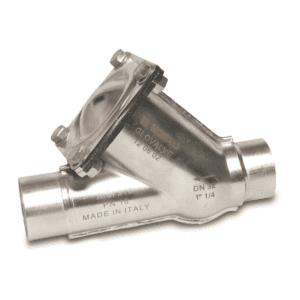


Bevo measuring, dosing and water treatment parts
Automatic water treatment stands or falls with the small components around it: the probe that reads the water, the buffer solution that keeps that reading honest, the peristaltic tube that pushes acid or chlorine into the pipework, and the flow switch that stops dosing when circulation drops. Here we list the Bevo range, which brings those consumables and control components together for private pools as well as larger commercial installations.
The listing runs to several hundred references, so it covers both complete sets and the individual pieces that are replaced on their own once a controller is installed and running.
What the range covers
Broadly, the parts fall into a handful of groups, and most installations will need something from each of them over time:
- Probes and sensors — ORP probes in glass, TDS sensor kits, and water level sensors supplied with 50 m or 100 m of cable.
- Calibration liquids — buffer and reference sets such as 4.01 / 7.00 / 475 mV / KCl / H₂O and 7.00 / 10.01 / 475 mV / KCl / H₂O.
- Dosing pump consumables — peristaltic pump tube in 4 mm x 6 mm on 100 m rolls, suction lances with integrated level probe, and suction plungers.
- Installation and assembly kits — Hydro/Electro + pH sets in Basic and Standard versions, tapping saddles for 50 mm and 63 mm pipe, and T-pieces for 50 mm/63 mm.
- Hand-held instruments — electronic meters reading EC, TDS, salt and temperature.
- Control and safety components — flow switches and control modules used with salt chlorinators, including the flow switch for Hayward AquaRite HC, LS and NG and the KLX Rx control module for AquaRite NG and KLX.
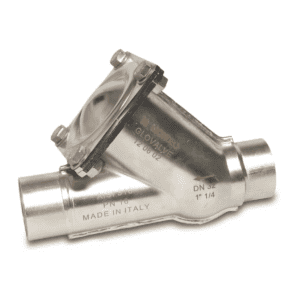
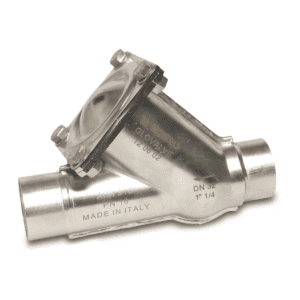
- Commercial strainers — Hydro strainers with 4″ x 6″ and 6″ flanged connections for larger circulation systems.
Probes, meters and calibration liquids
Probes are wear parts. A glass ORP or pH electrode slowly loses response as the junction fouls and the reference electrolyte ages, which shows up first as slow, drifting readings and calibrations that no longer hold. Keeping the sensing tip wet in KCl storage solution between seasons extends its working life considerably; letting it dry out rarely ends well.
Calibration sets are chosen to match the points your controller asks for. A unit calibrating on the acid side needs the 4.01 / 7.00 set, while one calibrating towards the alkaline side needs 7.00 / 10.01. The 475 mV reference solution is used for the redox channel, and the sachets or bottles of distilled water are there for rinsing between steps so one solution does not contaminate the next. Buffers have a limited shelf life once opened, so it is normal to order them as a routine consumable rather than once.
TDS sensor kits are supplied either as a tapping saddle, sized to the outside diameter of the pipe it clamps onto, or as a T-piece for 50 mm and 63 mm pipe where a new section is being built up. Measure the pipe itself before ordering — 50 mm and 63 mm look similar on a drawing but will not interchange.
Dosing pump spares and installation sets
On a peristaltic dosing pump, the tube is the part that fails. It is squeezed continuously by the rollers and eventually thins, flattens or splits, and output falls off before it stops altogether. Tube is specified by inner and outer diameter, so 4 mm x 6 mm means a 4 mm bore with a 6 mm outside diameter; check both against the tube currently fitted rather than guessing from the pump model. Buying on a 100 m roll suits anyone maintaining several pumps.
The suction side of the pump uses a lance that sits in the chemical drum, usually with a level probe so the controller can warn before the container runs dry, plus a foot valve and suction plunger arrangement. The Hydro/Electro + pH assembly kits in Basic and Standard versions gather the fittings needed to connect a dosing line and a probe holder into the circulation pipework in one order.
Bevo at PoolParthub.com
Here you will find the consumables, probes, sensors and installation fittings listed above, alongside the control components and commercial strainers that belong to the same installations. The emphasis is on the parts that are genuinely replaced — tube, buffers, electrodes, lances and switches — rather than only complete systems.
If you are matching a replacement, work from the measurements and the markings on the existing part: tube bore and outside diameter, pipe diameter at the saddle, cable length needed from sensor to panel, and the calibration points printed on the bottles you used last time. Those details identify the correct item far more reliably than the name of the equipment it came out of.