


Elecro
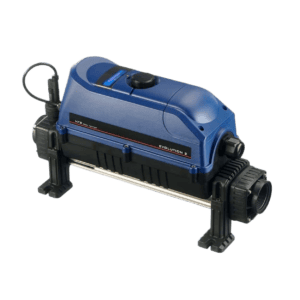
Elecro electric pool heating
Elecro is known for compact, inline electric water heaters used on swimming pools, spas and hot tubs. Instead of drawing heat from the air or from a boiler circuit, an electric heater passes the circulating water over a heating element and raises its temperature directly, which makes it a simple option where there is no gas supply and no room for an external heat pump. Here you will find the Evolution 2 range in 9 kW form, a unit sized for smaller pools, spas, plunge pools and for topping up temperature at the start and end of the season.
What an inline electric heater does
The heater sits in the circulation loop and only works while the pump is running: water enters one end, passes the element chamber and leaves at the set temperature. Output is fixed by the rating of the element, so a 9 kW unit adds a predictable amount of energy per hour of running time. The larger the body of water, the longer it takes to reach the target temperature, which is why electric heating is most often chosen for modest volumes or used together with a cover to hold the heat that has been paid for.
Because heating is electrical rather than combustion-based, there is no flue, no condensate and no fuel line, and the unit can be mounted indoors in a plant room next to the filter. The trade-off is the electrical supply: a 9 kW heater needs a correctly rated circuit and should be connected by a qualified electrician in line with local wiring regulations.
Choosing the right output
Picking a heater is mostly a matter of matching output to water volume and to how fast the temperature needs to rise. Points worth checking before ordering:
- Volume d'eau — calculate length × width × average depth for a rectangular pool, in cubic metres, then convert to litres. A 9 kW unit suits small volumes rather than large family pools.
- Use of a cover — evaporation is the single biggest heat loss. A pool without a cover may lose overnight most of what was gained during the day.
- Indoor or outdoor — sheltered and indoor pools hold temperature far better than an exposed garden pool in wind.
- Electrical capacity — confirm the available supply, phase and spare breaker capacity in the distribution board before committing to a given kW rating.
- Season length — occasional spring and autumn top-ups ask less of a heater than maintaining a set temperature all summer.
- Débit — the heater needs the pump flow its instructions specify; too little flow and the protection devices will cut in.
Installation and plumbing position
An electric heater normally goes last in the circuit, after the pump and filter and after any salt chlorinator, dosing point or UV unit, so that it receives already filtered water and is not exposed to concentrated chemicals. Fitting it on a bypass with isolating valves is good practice: the unit can then be shut off and drained for winter or taken out of line for service without stopping circulation.
Respect the flow direction marked on the body, keep straight pipe runs at the inlet and outlet where possible, and leave clearance around the unit for the electrical connections and for the control panel to be read. The heater must be bonded and earthed with the rest of the pool equipment, and it should never be run dry — always start the pump first and confirm flow before switching on the heating.
Service items and typical wear
Electric heaters are mechanically simple, so attention tends to focus on a short list of components. Union seals and O-rings at the pipe connections perish over time and are the usual cause of a weeping joint; measure an old seal’s inner diameter, outer diameter and thickness before ordering a replacement. The element chamber benefits from being kept free of scale, which forms faster in hard water and at high set temperatures and reduces heat transfer. Control components such as the thermostat sensor and the flow protection device are also serviceable items on heaters of this type. Water balance matters as much as any part: aggressive or unbalanced water shortens the life of anything it flows through.
Elecro at PoolParthub.com
Here we list the Elecro Evolution 2 electric pool heater in 9 kW, chosen as a straightforward heating solution for small pools, spas and shoulder-season use where an electrical supply is easier to provide than a gas line or an outdoor heat pump location.
If you are replacing an existing unit, note the model name, the kW rating and the pipe connection size from the old heater so the new installation matches the plumbing and the electrical circuit already in place. Where a detail is unclear, the model name and a photograph of the data label are usually enough to confirm the correct choice.