


VDL


VDL PVC-U valves and fittings for pool pipework
Pool circulation lines are built from solvent-weld PVC-U pipe, and the valves that sit in those lines decide how easy the system is to service. Here you will find VDL ball valves, drain valves, flanges, gaskets, hose tail adaptors and pipe clamps for pressure pipework, in metric sizes that match the pipe used on filtration, backwash, heating and dosing circuits. Everything is grey PVC-U unless stated otherwise, with glue sockets or glue spigots for a permanent solvent-cemented joint.
Was das Sortiment umfasst
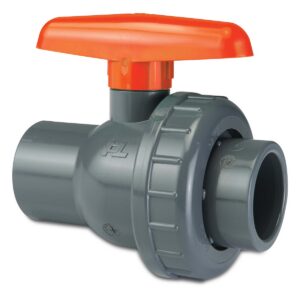
The core of the selection is ball valves in several constructions: Type EIL, Type DIL and ISO-TOP. The type code is the quickest way to tell versions apart when you need a replacement that will drop into the same position, so note it from the body or the original packaging before ordering. Alongside the valves sit the smaller items that make a pipe run serviceable.
- Kugelhähne in glue-socket form, from small dosing and gauge lines up to main circulation diameters.
- Drain valves in 32 mm glue socket, used as low-point drains on pump and filter lines so water can be let out before winter work.
- Stub flanges and flat gaskets for bolted connections to pumps, heat exchangers and tanks, where a glued joint would make future removal impossible.
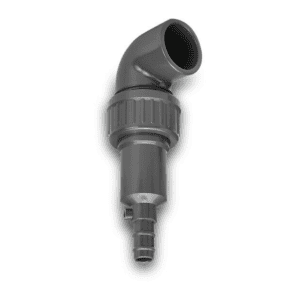
- Hose tail adaptors with a glue spigot on one side and a barbed tail on the other, for flexible hose on vacuum, waste or temporary lines.
- Pipe clamps and wall brackets in PP, including 200 mm Type F, to support pipework properly instead of letting it hang on its fittings.
Sizes, DN codes and pressure ratings
Two numbering systems appear on these products and mixing them up is the most common ordering mistake. The millimetre figure is the outside diameter of the pipe that fits into the socket; the DN figure is the nominal bore designation. A valve can therefore be described as DN40 and still take 50 mm pipe. The safest method is to measure the outside diameter of the existing pipe with a vernier or a tape and order to that figure.
- Metric sockets run through 20, 25, 32, 40, 50, 63, 75, 90 and 110 mm.
- DN designations in the range include DN15, DN20, DN25, DN32, DN40, DN50, DN90 and DN110.
- Pressure ratings are 16 bar on the smaller ball valves, 10 bar on the large 75 mm, 90 mm and DN110 bodies, and 6 bar on the 32 mm drain valve.
- Flange parts are matched as a set: a stub flange, a backing ring and a flat gasket of the correct nominal size.
Seals, gaskets and the parts that wear
PVC-U bodies rarely fail; the elastomer parts do. Ball valves are offered with standard seals or with Viton (FKM) seals, which are chosen where the line carries more aggressive chemistry such as acid or hypochlorite dosing rather than plain filtered pool water. If you are replacing a valve on a dosing line, keep the same seal material. Stiff operation, weeping around the stem or a ball that no longer shuts off fully usually points to hardened O-rings and seats.
Flange gaskets are sold by nominal size and by dimension. The EPDM flat gasket listed for DN50 measures 71 × 45 × 3 mm, which shows why it is worth measuring the old gasket across the outside diameter, the bore and the thickness before ordering. Fit gaskets dry and clean, tighten flange bolts evenly in a cross pattern, and never use solvent cement near a bolted joint.
Einbauhinweise
Dry-fit the valve first and check that the handle can swing clear of walls and neighbouring pipes. Cut pipe square, deburr it, clean both surfaces with PVC cleaner and apply cement to socket and spigot before pushing home with a quarter turn. Keep cement away from the ball and seats, and let the joint cure before pressurising. Support heavy large-diameter valves with clamps so their weight is not carried by the glued joints.
VDL at PoolParthub.com
Here we list the VDL ball valves, drain valves, flanges, gaskets, adaptors and clamps that come up most often when a pool plant room is repaired, extended or rebuilt, across the full metric size span from 20 mm dosing lines to DN110 main pipework.
The aim is to let you replace a single valve or seal rather than rework a whole pipe run. If you are unsure which type or seal material you have, check the marking on the body, measure the pipe outside diameter and compare it with the figures given in each listing.