


Comar

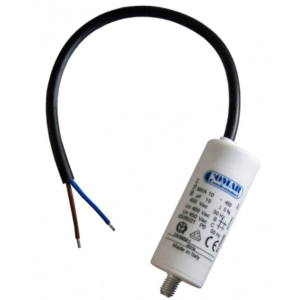
Comar motor run capacitors for pool pump motors
Almost every domestic pool pump runs on a single-phase motor, and almost every single-phase motor needs a capacitor to get turning and to keep turning smoothly. When a pump hums but will not start, trips the supply, or starts only after a nudge of the fan, the capacitor is the first component to check. Here you will find Comar capacitors in the two values most often fitted to pool and spa circulation pumps, both supplied with flying leads ready to wire into the motor terminal box.
What a motor run capacitor does
A single-phase supply on its own cannot create a rotating magnetic field. The capacitor sits in series with the motor’s auxiliary (start) winding and shifts the phase of the current through it, so the two windings together produce the rotation the rotor needs. In a permanent-split capacitor motor — the arrangement used by most pool pumps — the capacitor stays in circuit the whole time the pump runs, which is why these are called run capacitors rather than start capacitors.
Because the component is energised continuously, it ages. Heat in the pump housing, long daily running hours and voltage fluctuations all shorten its life. A tired capacitor loses capacitance gradually, so the symptoms creep in: slower starting, more noise, a motor that runs hot, or a pump that works in spring and refuses in the heat of August. A bulged or leaking can is a clear sign of failure, but many capacitors die without any outward change at all.
The range: 20 µF and 25 µF at 450 V
Both items on this page are cylindrical can-type capacitors rated at 450 V with a 250 mm cable tail, differing in capacitance and in the height of the body:
- Comar MKA 20 µF 450 V — Ø40 x 70 mm, 250 mm cable, part 8173651.
- Comar MKA 25 µF 450 V — 40 x 94 mm, 250 mm cable, part 8173851.
These two values cover a large share of the mid-range pool pumps sold in Europe, typically those in the region of 0.5 to 1 hp, although the exact pairing of value to motor is set by the pump manufacturer and must be read from the motor itself.
Choosing the right capacitor
Replacing like with like is the only safe approach. Fitting a higher value in the hope of more power will overheat the auxiliary winding; fitting a lower one leaves the motor struggling to start. Work through the following before ordering:
- Capacitance — read the µF figure printed on the side of the old capacitor, or on the motor nameplate or wiring diagram inside the terminal box. It must match exactly.
- Voltage rating — 450 V here. Never fit a capacitor rated below the one you removed.
- Body diameter and length — measure the can, not the cable. A 40 x 70 mm unit will not fill the space left by a 40 x 94 mm one, and a taller can may foul the terminal box lid or the pump shroud.
- Connection type — both of these have a moulded cable tail. If your motor uses push-on faston tabs, you will either need a tabbed version or suitable crimp connectors.
- Mounting — check how the original was held: some sit in a clip or cradle, others are secured at the base. Confirm the new can can be fixed the same way.
Fitting and safety notes
Isolate the pump at the breaker before opening anything, and remember that a capacitor can hold a charge after the supply is cut. Discharge it safely across a resistor before handling the terminals. Photograph the existing wiring before disconnecting it, keep the cable away from the fan and from hot surfaces, and make sure the terminal box gland and lid seal properly again — these boxes sit in damp plant rooms and water ingress will destroy the replacement quickly.
If a new capacitor of the correct value does not cure the fault, look further: a seized pump shaft, a blocked impeller, a failed bearing or a damaged winding will all present with similar symptoms.
Comar at PoolParthub.com
Here we stock Comar capacitors in the sizes that keep pool pump motors turning, each with a 250 mm cable so the unit can be wired directly into the motor terminal box without adapters. Part numbers, capacitance, voltage and can dimensions are listed with every item so the replacement can be matched to the component already fitted.
A capacitor is a small, inexpensive part that takes a whole pump out of service when it fails, so it is worth identifying the correct value once and noting it for future reference. If your pump needs a value or a terminal style not shown on this page, browse the wider pump motor and electrical sections for alternatives.