


Water-ID


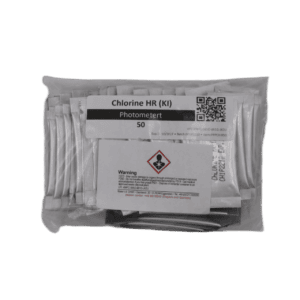




Water-ID PoolLab reagent tablets and water testing consumables
Water-ID is known in the pool trade for the PoolLab photometer system and the reagent tablets that go with it. The hardware lasts for years; the tablets are a consumable that needs reordering every season. Here you will find the tablet reagents across the measurable parameters, supplied in foil strips and offered in several pack sizes so that a private pool owner and a service company testing dozens of pools a week can both buy sensibly.
Every reading a photometer gives depends on the correct tablet being crushed into the sample. Choosing the right reagent, and the right range of that reagent, is therefore the whole job. The notes below are intended to make that choice quick.
Cosa comprende la gamma
The tablets in this brand page cover the parameters a pool or spa operator normally monitors, as well as several that only matter on specific treatment systems:
- pH – Phenol Red tablets, the everyday reagent alongside disinfectant testing.
- Alkalinity-M – total (M) alkalinity, the buffer that keeps pH from drifting after every dose.
- Active oxygen and peroxide systems – DPD No. 4 tablets for active oxygen and Hydrogen Peroxide LR tablets for pools dosed with peroxide.
- PHMB – for pools run on polyhexamethylene biguanide rather than chlorine.
- Phosphate – Phosphate LR No. 2 and Phosphate HR No. 2, used when investigating stubborn algae and nutrient load.
- Iron LR – for well water, borehole fill water and staining problems.
- Potassium – relevant where potassium-based products are in use.
Pack sizes run from 50 tablets for occasional or specialist parameters up to 100, 250 and 500 tablets for the reagents that get used constantly, such as Phenol Red pH, Alkalinity-M, Hydrogen Peroxide LR and the DPD tablets. The narrower, more specialised chemistries are normally listed in the smaller pack only.
Choosing the right reagent and pack size
Tablet names look similar on screen, so work through them in this order:
- Match the parameter to your treatment – a pool on active oxygen needs DPD No. 4, a peroxide pool needs Hydrogen Peroxide LR, and a biguanide pool needs PHMB. Using a chlorine-family tablet on one of these systems will not give a meaningful figure.
- Check LR against HR – low range and high range tablets cover different concentration spans. Phosphate is the clearest example: Phosphate LR No. 2 suits trace levels, Phosphate HR No. 2 suits heavier contamination. If readings sit at the very top or bottom of the scale, you are probably on the wrong range.
- Respect the tablet number – a reagent marked No. 2 or No. 4 belongs to a numbered sequence. The tablets must be added in the stated order, with the stated mixing step between them, or the colour development will be wrong.
- Buy the pack size that matches your testing frequency – tablets have a finite shelf life once the foil is opened at the strip, so a service engineer benefits from 250 or 500 packs while a single domestic pool is usually better served by 50 or 100.
- Note the article code – codes such as TbsPpH100 or TbsPTA500 identify the parameter and the pack quantity together, which is the fastest way to reorder exactly what you had before.
Getting reliable readings
Rinse the sample cell with pool water before filling it, and take the sample from elbow depth away from the inlets rather than from the surface. Push the tablet straight from its foil into the cell without touching it, crush it fully against the bottom of the cell, then mix until no particles remain. Undissolved fragments scatter light and give high or unstable results.
If a result looks implausible, repeat the test with a fresh tablet before adjusting any chemistry. A single mis-read pH or alkalinity figure can lead to an unnecessary dose that then has to be corrected again. Keep the optical windows of the cell clean and free of scale, sun cream and fingerprints, as these affect the reading more than most users expect.
Stoccaggio e movimentazione
Store tablets in a cool, dry place out of direct sunlight, with the foil strip intact until the moment of use. Reagent tablets are hygroscopic: a strip left open in a damp plant room will deteriorate long before its printed date. Keep them away from chlorine granules, acid and other pool chemicals, and keep them out of reach of children.
Water-ID at PoolParthub.com
Here we list the Water-ID tablet reagents for PoolLab testing, grouped by parameter and by pack quantity, so that the right code can be found without cross-checking a catalogue. The emphasis is on the reagents that are actually used up in service work: pH, alkalinity, the DPD tablets, peroxide and the specialist chemistries for non-chlorine systems.
Because testing consumables are what keep a photometer honest, the range is kept broad rather than limited to the two or three best sellers. Owners of alternative treatment systems and technicians servicing mixed portfolios of pools can order the less common tablets from the same place as the everyday ones.