


Elettrolisi del sale



Salt electrolysis for swimming pools
Salt electrolysis replaces the job of adding chlorine by hand. A low concentration of salt is dissolved in the pool water, and as that water passes through the cell of the chlorinator an electrical current converts the chloride into active chlorine. The chlorine disinfects the water, is used up, and returns to chloride again, so the same salt keeps working for a long time and only needs topping up after backwashing, heavy rain or water replacement. The result is water that feels softer, with far less handling of chemical containers.
Because the unit sits in the pipework after the filter and is wired into the pump circuit, a salt system is made up of more than the power supply and the cell. Flow detection, temperature measurement, earthing and — on systems that also manage pH — a dosing line with its own hose, lance and level sensor all have to work together before the controller will produce chlorine. Here you will find the complete units alongside the individual parts that keep them running.
Cosa comprende la gamma
The selection is built around the Hayward Aquarite HC LS NG platform and the parts that serve it, including the related KLX control electronics.
- Complete chlorinators: Aquarite HC LS NG in a 60 m³ and a 120 m³ version, both 230 VAC, so the unit can be matched to the volume of the pool rather than over- or under-sized.
- Control electronics: the KLX Rx control module of the type used on AquaRite NG and KLX systems, for installations where the measuring and control side needs renewing rather than the whole appliance.
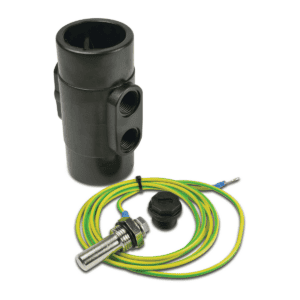
- Flow and safety components: the flow switch for Aquarite HC LS NG, which tells the controller that water is actually circulating, plus the ground connection used on salt electrolysis systems.
- Sensori: a three-wire black temperature sensor, and a suction lance fitted with an empty tank sensor so dosing stops when the container runs dry.
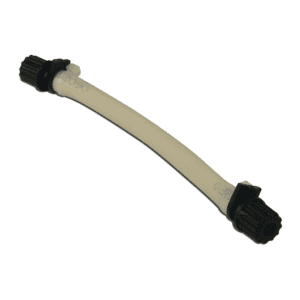
- Dosing line parts: a 5 l/h dosing hose for the peristaltic side of systems that also correct pH.
Identifying the right part
Salt systems are unforgiving about mismatched parts, so it pays to check before ordering.
- Start with the model plate: note the exact family and generation — Aquarite HC, LS, NG or KLX — because connectors and firmware differ between generations even when the housing looks similar.
- Match the capacity, not the pool shape: the 60 m³ and 120 m³ ratings refer to water volume. Work out length × width × average depth and choose the unit that comfortably covers it, allowing for high bathing load or a lot of sun.
- Use the exploded view: service drawings number each component. Quoting the position number together with the part reference is the quickest way to be sure a sensor or switch is the one fitted to your cabinet.
- Count the wires: a temperature sensor with three conductors is not interchangeable with a two-wire type, and cable length matters if the sensor sits away from the control box.
- Measure dosing hose by rating: a peristaltic hose is chosen by the flow of the pump it belongs to, here 5 l/h, and by its internal diameter and wall thickness. A hose that is close but not identical will slip or burst in the rollers.
Typical wear points
Electrodes scale up over time, particularly in hard water, and reduced chlorine output is often the first sign. Flow switches fail because the paddle or reed contact wears, after which the controller reports no flow and refuses to produce chlorine even with the pump running. Temperature sensors drift or go open-circuit, which can cause the system to reduce output in the belief that the water is cold. On dosing systems the hose is a consumable: it is squeezed thousands of times and should be replaced as planned maintenance rather than after a leak. Suction lances and their level sensors suffer from acid or chlorine vapour and from crystallisation around the tip.
Earthing deserves attention too. A salt cell in a metal-containing circuit needs a correct ground connection to limit stray currents and galvanic corrosion of ladders, heat exchangers and fittings.
Salt electrolysis at PoolParthub.com
Here we list complete Aquarite HC LS NG chlorinators for 60 m³ and 120 m³ pools together with the parts that are actually asked for in service: flow switches, three-wire temperature sensors, ground connections, suction lances with empty tank detection, 5 l/h dosing hose and the KLX Rx control module for AquaRite NG and KLX systems.
The aim is to keep an existing installation in service instead of replacing a working cabinet because one sensor or hose has given up. Each item is listed with its manufacturer reference so it can be checked against the drawing or the label on the unit before ordering.