


Jason


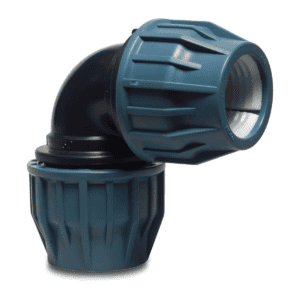


Jason compression fittings for PE pool pipework
Jason supplies polypropylene compression fittings for polyethylene pressure pipe — the kind of pipework used for buried supply and return lines, heat pump connections, backwash lines and pump suction runs around a swimming pool. A compression fitting needs no glue and no heat: the pipe is pushed into the body, the nut is tightened, and a clamping ring and O-ring together grip and seal the pipe. That makes it the practical choice for work on a wet or dusty site, for repairs where solvent cement will not cure, and for any connection you may want to take apart again.
Here you will find the 90° elbow in the Jason programme, in a full ladder of diameters, all rated 16 bar and finished in the familiar black body with blue nuts.
What the Jason range covers
The elbows listed on this page run from small dosing and top-up lines right up to main pool circulation pipework:
- 16 mm and 20 mm – small-bore runs, dosing lines, top-up feeds and instrument connections.
- 25 mm and 32 mm – secondary circuits, garden and service lines, feeds to smaller equipment.
- 40 mm and 50 mm – typical domestic pool circulation sizes, matching common pump and filter connections.
- 63 mm and 75 mm – larger private pools and longer runs where flow velocity has to be kept down.
- 90 mm and 110 mm – main lines on large private and commercial installations.
Several of the sizes carry DVGW, KIWA, WRAS and SVGW markings, the German, Dutch, British and Swiss drinking-water approval marks. The article numbers follow an easy pattern: the last two digits of the code give the diameter, so 0706540 is the 40 mm elbow and 0706575 the 75 mm. That makes it quick to confirm you are looking at the right part before ordering.
Choosing the right size and matching it to your pipe
Compression fittings are sized by the outside diameter of the pipe, not by an internal bore or a thread size. Measure the pipe itself with a caliper or a tape around the circumference and work back to the diameter; a 50 mm fitting takes 50 mm PE pipe and nothing else. Points worth checking before you order:
- Pipe material – these fittings are intended for PE pressure pipe. They are not a substitute for a solvent-weld fitting on rigid PVC-U pool pipework.
- Pipe wall and pressure class – the clamping ring must have a reasonably stiff pipe wall to bite into, so check the PN rating of the pipe as well as the fitting.
- System pressure – the elbows on this page are rated 16 bar, well above normal pool circulation pressures, but the weakest element in the run still sets the limit.
- Duty – compression fittings are generally used on cold water lines; for heated circuits, check the intended operating temperature against the manufacturer’s data.
- Access – leave enough room around the fitting to get a strap wrench on the nut, especially on the larger diameters.
Fitting and maintaining a compression elbow
Cut the pipe square, deburr and lightly chamfer the end, and wipe it clean — grit dragged past the O-ring is the most common cause of a weeping joint. Mark the insertion depth on the pipe so you can see that it is fully home, then push it in past the clamping ring until it reaches the stop. Tighten the nut by hand first and finish with a strap wrench; over-tightening a plastic nut can crack it or distort the sealing ring rather than improving the seal.
If an older joint starts to seep, it is usually the O-ring rather than the body. Loosen the nut, withdraw the pipe, and inspect the ring and the clamping ring for cuts, flats and hardening. Replacing a damaged sealing element and refitting on a clean pipe end restores the joint. Keep buried fittings free of stones and backfill with sand so nothing is pressing against the nut.
Jason at PoolParthub.com
Here we list the Jason 90° compression elbows across the full diameter range, from 16 mm up to 110 mm, so a single pipework design can be completed from one family of fittings with consistent nut sizes and a consistent assembly method.
Because pool pipework is often altered, extended or repaired years after it was first laid, having each diameter available matters more than having many variants of one size. Compare the size on your existing nut or pipe with the list above, or use the article number, and the matching part is easy to identify.