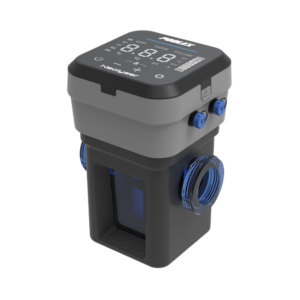
Salt chlorinators for convenient pool disinfection
A salt chlorinator uses electrolysis to convert dissolved salt in the pool water into free chlorine. A low concentration of salt is added once to the pool, after which the water continuously circulates through a cell installed in the filtration circuit. When an electric current passes through this cell, chlorine is generated on the plates and immediately mixed back into the water.
This process runs automatically whenever the filtration pump operates, producing a steady level of disinfectant instead of large peaks from manual chlorine additions. The salt itself is not consumed in one cycle; it is regenerated in the process and only needs occasional topping up to compensate for water loss due to backwashing, splash-out or draining. The result is a more stable chlorine level and a more comfortable swimming experience.
Benefits of a saltwater pool
A well-dimensioned salt chlorinator offers several advantages over traditional tablet or liquid dosing. The water often feels softer on the skin, and you avoid handling and storing large quantities of packaged chlorine. Because the system doses continuously, you also reduce the risk of under- or overdosing.
Typical benefits include:
- Stable chlorine levels with less manual intervention
- Reduced use of packaged chlorine products
- Pleasant swimming comfort with less chlorine smell
- Continuous disinfection linked to the filtration cycle
For many pool owners, this leads to clearer water, fewer algae problems and a simpler maintenance routine, especially during the peak of the swimming season when load and temperatures are highest.
Choosing the right salt chlorinator
Selecting a salt chlorinator starts with the pool volume and filtration setup. Each unit is rated for a maximum pool size, often expressed in cubic metres, and this rating should be matched or slightly overspecified to handle warmer water, higher bather loads or covered pools where chlorine demand fluctuates. It is also important to consider the minimum required salt concentration and whether the unit offers adjustable production levels for fine-tuning.
Additional features can further simplify water treatment. Some systems integrate pH control, measuring and adjusting pH automatically to keep the water within the ideal range for chlorine efficiency and user comfort. Others offer boost modes for shock treatment, low-salinity alarms, temperature compensation and connectivity options for remote monitoring. Product descriptions at PoolParthub.com clearly indicate recommended pool size, salt range, cell type and available functions to support the right choice.
Installation and maintenance considerations
A salt chlorinator is typically installed in the return line after the filter, often together with a flow switch or sensor to prevent operation without sufficient water flow. Correct positioning and adherence to the manufacturer’s installation guidelines are important for both performance and safety. In many cases, especially for more complex systems or existing plant rooms with limited space, professional installation is recommended.
Routine maintenance focuses mainly on the electrolytic cell. Over time, calcium deposits and other residues can build up on the plates, especially in harder water. Regular visual checks and, when needed, careful cleaning according to the manual help maintain efficiency and extend cell life. It is also advisable to monitor salt concentration, stabiliser, pH and alkalinity with suitable water testers, so the chlorinator can work under optimal conditions.
By combining a correctly sized salt chlorinator from PoolParthub.com with proper installation and water balance, you can enjoy a modern, automated disinfection system that delivers clear, hygienic water with less manual effort and more consistent results throughout the swimming season.